Principaux enseignements
- A sterilization audit trail should allow a dental practice to reconstruct what happened during a specific cycle, including the equipment used, monitoring results, load information, and any corrective action.
- Mechanical, chemical, and biological monitoring records are more useful when they can be connected to the same cycle.
- Consistent identifiers such as sterilizer name, date, cycle or load number, and operator make records easier to trace.
- Equipment maintenance, failed test investigations, and corrective actions can also form part of the audit trail.
- Requirements for traceability, documentation, and retention vary by jurisdiction.
- Digital systems can make records easier to organize and retrieve, but they do not replace regulatory requirements, manufacturer instructions, or professional judgement.
Introduction
A sterilization record tells you what happened during a cycle. A complete sterilization audit trail connects the information needed to understand that cycle from beginning to end.
If a biological indicator produces an unexpected result months later, could your team identify the sterilizer involved, find the corresponding mechanical and chemical monitoring results, determine what was processed, and see what corrective action followed?
That is the practical purpose of an audit trail. The goal is not necessarily to document more information, but to make sure the records created throughout the sterilization process are complete, consistently identified, and easy to connect.
What Is a Sterilization Audit Trail?
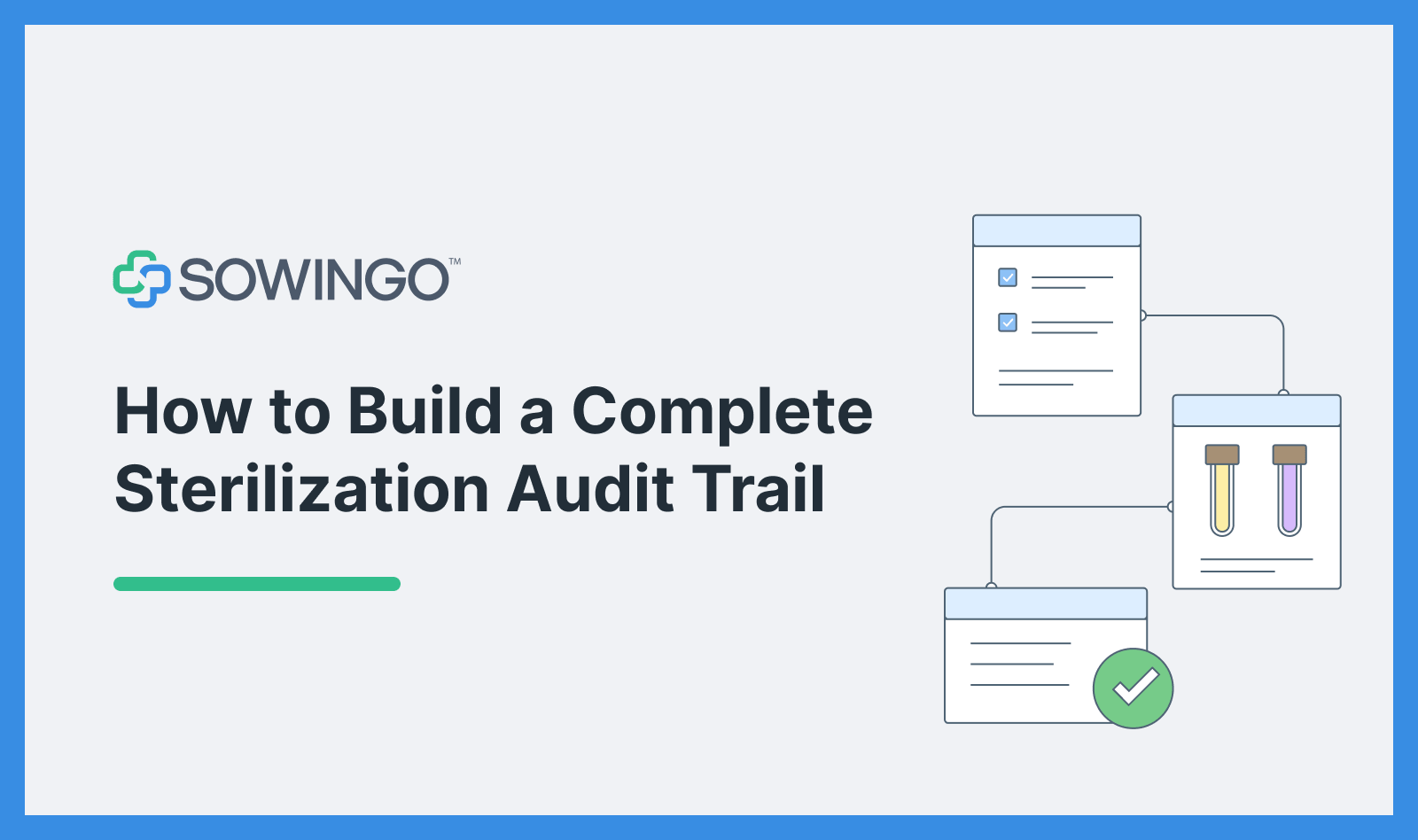
A sterilization audit trail is the documented history that allows a practice to trace a sterilization cycle, its monitoring results, and related actions over time.
The U.S. Centers for Disease Control and Prevention recommends using mechanical, chemical, and biological monitoring to evaluate sterilization and maintaining accurate monitoring records as part of a dental infection prevention program.
An audit trail brings those records together so the practice can reconstruct what happened without searching through disconnected logs, printouts, test results, and equipment records.
A Sterilization Log and an Audit Trail Are Not the Same Thing
A sterilization log is one part of an audit trail.
The log typically records routine information such as the date, sterilizer, load or cycle number, operator, and monitoring results. The broader audit trail connects that information with other relevant records when they exist, including:
- mechanical, chemical, and biological monitoring
- load or package information
- equipment maintenance and repair
- failed test investigations
- repeat testing and corrective action
Not every cycle will generate all of these records. What matters is that relevant information can be connected back to the sterilizer and cycle involved.
Start With a Consistent Cycle Identity
A clear cycle identity creates the foundation for the audit trail.
Practices should consistently identify cycles using information such as:
- date
- sterilizer
- cycle or load number
- cycle type
- operator
- load contents or package information where required
Consistency matters. If one record refers to “Autoclave 1, Load 1842” while another calls the same cycle “Tuesday PM,” connecting the records later becomes unnecessarily difficult.
Teams should also use the same naming convention for equipment across their documentation.
Connect Mechanical Monitoring to Every Load
Mechanical monitoring records the physical conditions produced during the sterilization cycle.
For steam sterilizers, dental teams typically review cycle time, temperature, and pressure according to the manufacturer’s instructions. CDC guidance recommends mechanical monitoring for every sterilizer load.
Those results should be connected to the specific cycle they came from. The practice should be able to determine which sterilizer generated the reading, whether the expected parameters were reached, and whether an abnormal result occurred.
Correct mechanical readings do not prove sterility, but they provide immediate information about the sterilizer’s physical performance.
For more detail, see Mechanical Monitoring in Sterilization: What Dental Teams Should Check Every Cycle.
Connect Chemical and Biological Monitoring Results
Chemical and biological monitoring provide additional information about the sterilization process and should also be traceable to the appropriate package, load, or sterilizer.
Chemical indicators help determine whether specified sterilization conditions were reached at the location of the indicator. An unexpected result becomes much easier to investigate when the practice can immediately connect it to the corresponding cycle.
Biological indicators, commonly called spore tests, should similarly be linked to the sterilizer and testing cycle. Records may include the processed indicator result, control result, date, sterilizer, and any other information required by the practice’s procedures or jurisdiction.
The important point is not simply that these results were documented. It is that the team can determine which sterilization activity they relate to.
For more detail, see Understanding Chemical Indicators in Dental Sterilization and Understanding Biological Indicators and Spore Testing in Dental Sterilization.
Connect the Cycle to What Was Processed
A useful audit trail should also provide the level of instrument or package traceability required by the practice’s procedures and jurisdiction.
That does not necessarily mean documenting every individual instrument. The appropriate level of detail varies.
For example, Ontario’s Royal College of Dental Surgeons requires specific sterilization cycle and package information to be documented and requires practices to maintain an instrument recall policy and procedure.
Other jurisdictions may have different expectations.
The goal is to ensure that if a problem is discovered, the practice can identify the instruments or packages affected to the extent required by its governing requirements.
Patient Traceability Depends on the Jurisdiction
A complete audit trail does not automatically mean sterilization information must be entered directly into every patient chart.
Requirements vary by jurisdiction.
For example, RCDSO does not require Ontario dentists to record sterilization information directly in the patient chart, although practices must maintain a documented instrument recall process.
Practices should therefore design traceability around the requirements that apply to them rather than assuming one documentation model applies everywhere.
Include Equipment Maintenance and Service History
Equipment history can provide important context when a monitoring result is abnormal.
Preventive maintenance, repairs, servicing, and equipment testing should be organized so they can be connected to the sterilizer involved. If an unexpected monitoring result follows recent maintenance or repair, that history may become relevant during the investigation.
Keeping equipment records identifiable by sterilizer creates a more complete picture of how the unit has performed over time.
Document What Happened After a Failed Result
A strong audit trail should continue beyond the initial monitoring result.
When a mechanical, chemical, or biological result indicates a possible problem, documentation may need to capture:
- the result that triggered the investigation
- affected sterilizer and load information
- other monitoring results reviewed
- potentially affected instruments or packages
- equipment checks or repairs
- repeat testing
- corrective action
- final outcome
The exact response depends on the type of failure, manufacturer instructions, and applicable requirements.
What matters from an audit-trail perspective is that someone reviewing the record later can follow the issue from detection through resolution.
For more detail, see What Should You Do After a Failed Sterilization Test?.
Build the Audit Trail Into the Daily Workflow
Audit trails become unreliable when staff have to reconstruct them later.
For each cycle, the team should know which identifiers to use, where monitoring results are recorded, who reviews them, and what happens when a result is unexpected.
A straightforward process followed consistently is more useful than an elaborate system that depends on staff remembering to connect records at the end of the day.
This is one reason sterilization documentation often breaks down in busy practices. Delayed entries, inconsistent naming, and records stored in different locations can gradually create gaps in the history.
Make Historical Records Easy to Retrieve
Creating the record is only useful if the practice can find it later.
If someone needed information about a sterilizer cycle from two years ago, could the team search by date, machine, or load number and find the related monitoring and corrective-action records?
Whether the practice uses paper or digital documentation, records should follow a consistent filing structure and be retained according to applicable requirements.
For more on the trade-offs between formats, see Paper Logbooks vs. Digital Sterilization Tracking for Dental Practices.
Test Your Audit Trail Before You Need It
Practices do not need to wait for an inspection or failed test to find documentation gaps.
Choose a previous cycle and try to reconstruct it. Can you identify the sterilizer and operator? Find the mechanical and chemical results? Locate the relevant biological monitoring history? See what happened after an abnormal result? Find service records if they are relevant?
If one of those connections breaks, the practice has identified an opportunity to improve its documentation process.
How Sowingo Helps Build a Digital Sterilization Audit Trail
When cycle records, monitoring results, equipment information, and supporting documentation are stored in different places, reconstructing a historical event can take unnecessary time.
Sowingo’s Sterilization and Compliance software helps practices maintain sterilization documentation in a centralized digital workflow. Teams can document biological indicator tests, sterilizer and chemical tests, ultrasonic cleaner tests, and washer-disinfector tests while maintaining a searchable history of previous activity.
Sowingo also supports instrument traceability through autoclave-resistant pouch labels that can be scanned into patient charts.
Digital documentation does not determine whether a practice is compliant or replace regulatory requirements, manufacturer instructions, or professional judgement. It provides a more organized way to maintain and retrieve the records supporting those responsibilities.
Conclusion
A complete sterilization audit trail is not a single log. It is the connection between the records created throughout the sterilization process.
When cycle information, monitoring results, equipment history, traceability records, and corrective actions can be connected, dental teams are better equipped to reconstruct what happened and respond when a record needs to be reviewed.
Building those connections into the everyday workflow is far easier than trying to recreate them after a problem occurs.
Foire aux questions
What is a sterilization audit trail?
A sterilization audit trail is the documented history that allows a dental practice to trace a sterilization cycle and its related monitoring results, equipment information, and corrective actions.
What should a sterilization audit trail include?
Requirements vary, but an audit trail commonly connects cycle and sterilizer information with mechanical, chemical, and biological monitoring results. Equipment history, corrective actions, load information, and instrument traceability may also be relevant.
Is a sterilization log the same as an audit trail?
No. A sterilization log records routine cycle information. An audit trail connects that information with other relevant records so the practice can reconstruct the broader history of a sterilization event.
Does an audit trail need to connect instruments to patients?
Not universally. Patient and instrument traceability requirements vary by jurisdiction. Practices should follow the requirements that apply to them and maintain an appropriate recall process.
Can a sterilization audit trail be digital?
Yes, provided the records meet the requirements that apply to the practice. Digital systems can make historical information easier to search and connect.
How can a practice test its sterilization audit trail?
Select a historical cycle and try to locate the corresponding cycle information, monitoring results, equipment records, and any corrective action. Missing connections can reveal gaps in the documentation workflow.
References
- U.S. Centers for Disease Control and Prevention. Best Practices for Sterilization Monitoring in Dental Settings
- U.S. Centers for Disease Control and Prevention. Guidelines for Infection Control in Dental Health-Care Settings
- Royal College of Dental Surgeons of Ontario. Infection Prevention and Control Frequently Asked Questions
Related Sowingo Articles
- Mechanical Monitoring in Sterilization: What Dental Teams Should Check Every Cycle
- Understanding Biological Indicators and Spore Testing in Dental Sterilization
- Understanding Chemical Indicators in Dental Sterilization
- Sterilization Record Keeping: What Should Dental Practices Keep and For How Long?
- What Should You Do After a Failed Sterilization Test?
- Why Sterilization Documentation Breaks Down in Busy Dental Practices
- Paper Logbooks vs. Digital Sterilization Tracking for Dental Practices
- Aperçu de la stérilisation